 |
 |
 |
 |
 |
 |
 |
| Repression In British Prisons |
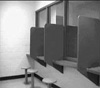
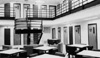
In 1994 a number of prison officers sat playing 'Scrabble' in the Special Security Unit of Whitemoor Prison in Cambridgeshire, England. Meanwhile their charges, mainly Irish POW's, and supposedly amongst the most closely guarded prisoners in the British prison system, were busy escaping. Six months later, three prisoners practically walked out of Parkhurst maximum security prison on the Isle of Wight, Britain's 'Alcatraz'. The two events were to signal the start of a wave of unprecedented repression in the British prison system, the aim of which is to crush prisoner resistance once and for all. The seeds for the repression had been planted after the 1990 Strangeways revolt, Britain's biggest prison uprising to date. While some humanitarian concessions were introduced as a tactical holding measure in the wake of the revolt, the British State began to develop strategies and make plans to ensure that there would never be another Strangeways. After the initial uprising, Strangeways had quickly developed into a roof-top protest, which to the great embarrassment of the State, dragged on for weeks in the direct view of the press and public. Roof-top protests had in fact been going on in British prisons for many years, and were always one of the more spectacular acts of prisoner resistance. Changes in prison architecture following Strangeways have made them a thing of the past. Along with changes to the design of prison roofs, and ensuring that no parts of modern prisons could be viewed from outside the walls, the architectural changes reflected the security lessons learned from past uprisings. Prison 'wings' (cell blocks) were designed with maximum emphasis on observation, security and control. Intrinsic to this was the increased use of CCTV cameras. New strategies for dealing with the media were also developed, the 'classic' Prison Service line in relation to prison uprisings has now become that they are caused by prisoners who resent attempts to stop them taking drugs. Following the Parkhurst and Whitemoor escapes two carefully 'stacked' reports were commissioned by the Home Secretary, these are known, after their respective authors, as the Woodcock and Learmont reports. Woodcock had previously been Britain's highest-ranking cop, so his antipathy towards prisoners could be relied upon. Learmont was an ageing 'Colonel Blimp' character, who in his own words had never given a moments thought to prisons or prisoners before receiving the Home Secretaries phone call appointing him. Predictably, the 2 reports recommended the introduction of a huge number of repressive 'security' measures. Yet, to a large extent both Woodcock and Learmont were simply stooges to a pre-planned agenda. According to Woodcock, his recommendations were only ever supposed to apply to the Special Security Unit of Whitemoor Prison, yet the Home Secretary immediately announced they were to be 'phased in' throughout the entire prison system. Many of the measures, such as greater restrictions on prisoners' property (so-called 'volumetric control') mirror those introduced in U$ prisons over the past years. In fact the maximum security prisons were actually among the last jails where the repressive changes were introduced, simply because it was anticipated that it was here that resistance would be greatest. One of the earliest prisons where the first of a sliding scale of 'Woodcock recommendations' (in this case mainly affecting visits) was introduced early in 1995 was the privately run (Wakenhut) Doncaster Prison. Woodcock and Learmont actually toured the prison on the very day the new measures came into force, only to be greeted with a solid prisoners' work-strike, the torching of one of the wings and a range of other acts of resistance. The eventual total introduction of Woodcock's repressive recommendations, and those subsequently introduced in Learmonts' name, did meet with substantial resistance, not least the full scale uprising by 200 prisoners at Full Sutton maximum security prison in January 1997. There had been more minor uprisings and work-strikes at Full Sutton in response to the repression as early as 1995, but the uprising of 1997 caused £2,000,000 worth of damage, and left the 'flagship' prison running at half capacity for an entire year. Along with the physical 'security' restrictions were a number of cleverly calculated 'psychological' initiatives, the most successful and far-reaching of which is the so-called 'Incentives and Earned Privileges Scheme', which gave a new 'spin' to the age-old 'divide and rule' concept by introducing a state-formulated class system into prisons. The scheme splits prisoners into 'Basic', 'Standard' and 'Enhanced' (known as 'The Enchanted') depending on their behaviour and level of compliance with the system. At first there was little difference between the categories, but the gaps have widened over the years, as has the level of 'compliance' required. A prisoner on 'Basic' will be held in virtual (or even actual) Segregation Unit conditions, even though he or she may not have committed any disciplinary offence. They will get no 'privileges', one or maybe two half-hour visits per month (possibly behind glass), and only £2.50 per week to spend at most (a 12g packet of tobacco is more than £2). By contrast, a prisoner who grovels his way to 'Enchanted' status, will have a TV, maybe cooking facilities, four or more visits per month of up to two and a half hours duration, £15 per week 'private cash' plus 'enhanced wages' and a range of other 'privileges'. In some prisons, the scheme has been so successful there are even different levels of 'Enhanced'. In terms of prisoner resistance the 'Incentives and Earned Privileges Scheme' has, even viewed alone, been catastrophic. The other most damaging weapon of the state has been the phasing-in of in-cell TVs (in conjunction with the above scheme.) Six years after the Whitemoor escape, and only 10 years after the 'new dawn' of prison liberalisation Strangeways supposedly heralded, the cycle of prison repression has once again virtually turned full circle, and 'Phase 1' is almost complete. The careful planning that went into the crushing of prisoner resistance was not to be squandered by sparking-off full-scale uprisings across the country. The repression was introduced slowly, with the worst of it only coming after the repatriation of Irish POW's, who made up the biggest block of militant prisoners in the system. The tactic most commonly used has been controlled provocation and containment, whereby some repression is introduced, and those resisting are targeted and moved out of the particular prison. By this and other methods the State have eventually clawed back almost all the concessions to humanity that long-term prisoners fought so hard to gain in the past, and achieved a largely compliant mainstream population ('Stepford Prisoners') ready for 'Phase 2' of the building of the British Prison Industrial Complex. In terms of dealing with prison militants, the State has of course sought to isolate and punish them, holding up their ill-treatment as an example to other prisoners tempted to stray from the path of full compliance. The ultimate 'big stick' was (and to some extent still is) Woodhill Control Unit, where a small number of 'persistently troublesome' prisoners are held in shockingly inhumane and brutal conditions. However, Woodhill has not been without it's problems from the State's point of view. There has been continual resistance from those allocated there, and solidarity from both other prisoners (a work strike at Full Sutton in 1999 for example) and prisoners support groups outside. Woodhill represents a clear target for prison protest, and has drawn the attention of human rights organisations like 'Amnesty International'. Because of this the Prison Service is tending to return to it's previous policy of dispersing prison militants to Segregation Units scattered around the prison estate, and moving them at regular intervals ('The Roundabout' or 'Ghost-train'). A relatively small number of 'trouble-makers' can be dealt with quite easily, and as brutally and inhumanely as is considered necessary, so long as there is overall compliance from the mainstream prison populace. Regrettably, this has currently been achieved to a large and unprecedented extent. With the mainstream population increasingly 'locked-down', cowed, alienated from each other, and placated with in-cell TV, the prison system is now in a position to cope with the vast numbers of people repressive legislation 'outside' will incarcerate within it. Phase 2 of the prison strategy, which is already 'seeping-in', will see the greater exploitation of this growing captive labour force as slaves. Prisoners will either be at work 'producing' or they will be locked behind their doors. Work - Watch TV - Sleep. That is the future the State sees for us, and as in America, the future is Private, with some of the same companies that lock up prisoners in the $tates currently funding the British Government's massive prison building programme. While we are certainly at a low-point in terms of the British prison struggle, resistance will always exist and endure. History shows us that revolutions have a habit of breaking out when the Powerful least expect them. Even slaves revolt. Mark Barnsley, August 2000. Parkhurst Prison, Isle Of Wight. Written for the American Anarchist prisoners' magazine 'Chain Reaction'. |
||||
| Aramark - The Prison Service's Company Store | |||||
 |
|||||
 |
|||||
 |
|||||